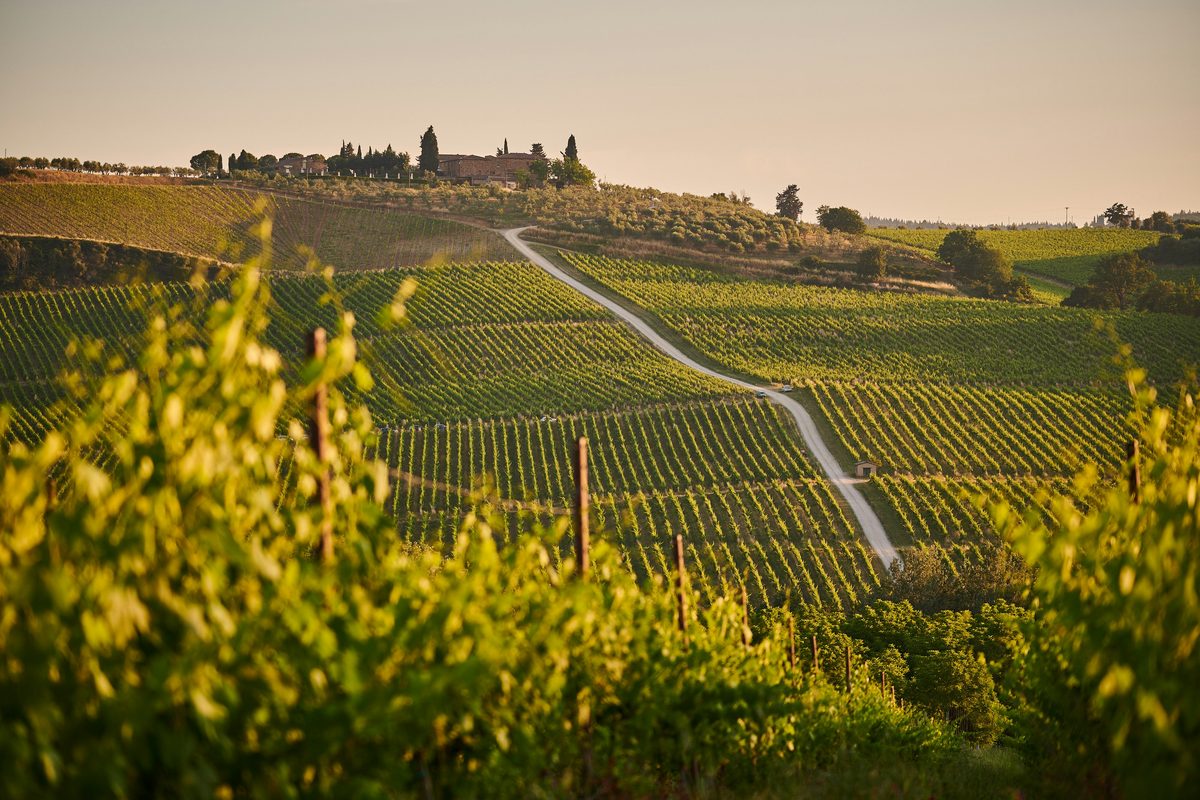
Italy is the world's largest wine producer measured by volume and contains a wine wealth that no other countries can match. With over 350 officially approved grape varieties and wine regions from the Alps in the north to Sicily in the south, there is an Italy for every taste and occasion.
What sets Italy apart from the rest is the diversity. Here you find everything from the light, fresh Pinot Grigio from Friuli to the massive, age-worthy Barolo from Piemonte — and thousands of local grapes and styles in between.
Italy's wine philosophy: Locality and tradition are everything. Italians have cultivated wine for over 2,000 years, and many grape varieties are found only in a single region. This gives wines with a unique sense of place that is rarely found elsewhere.
Italy's most important wine regions
Tuscany — the kingdom of the Sangiovese grape
Tuscany is the name most people think of when they hear "Italian wine". The Sangiovese grape dominates and expresses itself differently depending on terroir: in Chianti it is fresh and cherry-like, in Brunello di Montalcino it is deep, complex and age-worthy for decades.
Super Tuscans like Sassicaia and Tignanello broke with traditional rules in the 1970s and blend Sangiovese with international grapes like Cabernet Sauvignon — with world-class results.
The entry level is accessible: a simple Chianti for 80-120 kr is one of the wine world's best everyday wines for food.
Piedmont — Barolo and Nebbiolo
Piedmont in Northern Italy is home to Barolo, which is called "the wine of wine kings". The Nebbiolo grape produces wines with high acidity, pronounced tanninsand a complexity that develops beautifully over 10-20 years in the bottle.
It requires patience — but for those who want to experience something special, a Barolo from a good producer is an unforgettable experience. Barbaresco is Barolo's more accessible sister: still Nebbiolo, but a bit softer and ready to drink earlier.
Amarone — Veneto's powerhouse
Amarone della Valpolicella is one of the world's most unique wines. The grapes — primarily Corvina — are dried for several months after harvest, which dramatically concentrates sugar and flavor. The result is a wine with 15-17% alcohol, intense dark fruit, chocolate and spices — and a finish that lasts minutes.
Amarone is not an everyday wine — but for a special occasion it is an experience in itself.
Best introduction to Italian wine: Start with a Chianti Classico (100-150 kr), a Pinot Grigio from Friuli (90-130 kr) and a Nero d'Avola from Sicily (70-110 kr). Three vastly different sides of Italy's wine wealth.
Frequently asked questions
What are Italy's most important wine regions?
The most important regions are Piemonte (Barolo and Barbaresco made from Nebbiolo), Toscana (Chianti Classico and Brunello di Montalcino), Veneto (Amarone della Valpolicella), Friuli (Pinot Grigio) and Sicily (Nero d'Avola).
What is the difference between Barolo and Barbaresco?
Both are made from The Nebbiolo grape from Piedmont. Barolo is more powerful, more tannic and typically requires longer aging. Barbaresco is Barolo's more accessible sister — still Nebbiolo, but a bit softer and ready to drink earlier.
What is the best introduction to Italian wine?
Start with a Chianti Classico (100-150 kr), a Pinot Grigio from Friuli (90-130 kr) and a Nero d'Avola from Sicily (70-110 kr). Three vastly different sides of Italy's wine wealth at affordable prices.
Find a specific Italian wine
Describe your dish, your taste and your budget — the AI assistant finds the perfect Italian wine.
Try the AI assistant →